Quality systems and in-house lab.
ISO 9001:2015 certified. We test every batch for melt flow, ash, moisture and dispersion before dispatch.
ISO 9001 certified, audited annually by an accredited body
Not a plaque on the wall. It's the playbook for how mineral arrives, how a batch opens, what gets tested, who signs off, and how every shipment traces back to the operator who made it. Audited externally every year by an accredited body.Not a plaque on the wall. It's the playbook for how every batch is made, tested and traced. Audited externally every year by an accredited body.
-
01
Incoming raw material
Every incoming material, calcium oxide, calcium carbonate, titanium dioxide, pigments, carriers and additives, is checked against the supplier's certificate for purity, moisture and particle size. Off-spec lots are held back.
-
02
In-process sampling
Samples are pulled at every stage, blending, coating, extrusion and pelletising. Melt flow, density, dispersion and active content checked against the master grade card.
-
03
Finished-goods sign-off
Finished batch tested against the full grade spec, melt flow, ash, moisture, particle size, colour and visual pellet check. QC signs off before sealing.
-
04
Dispatch and traceability
Every pouch carries a batch ID linking back to the lot, line, operator and test record. A Certificate of Analysis ships with the consignment; retain samples kept for the shelf-life.
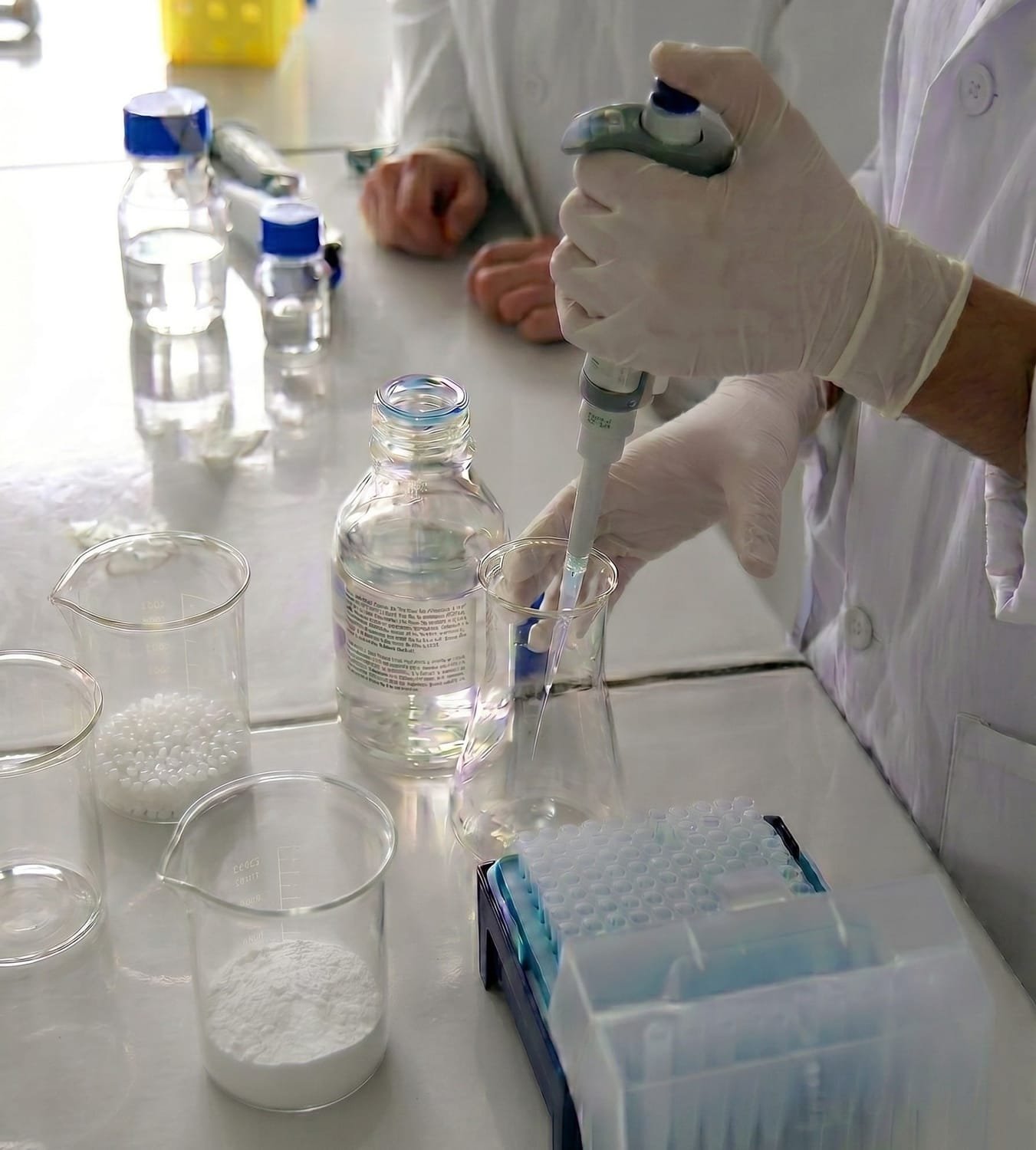
Polymer lab, adjacent to the production floor
The lab is right next to the production floor, so a sample drawn at the extruder is back with the operator before the next batch starts.
- Core test instruments on the bench
- Lab-scale twin-screw extruder for pilot batches
- Specialised tests (FTIR, DSC, TGA, GPC) routed to accredited external labs
- Same application chemist handles brief to production
Melt Flow Indexer (MFI)
How the carrier resin flows at standard temperature and load. Confirms a grade behaves the same lot after lot.
Moisture analyser
Karl Fischer titration and loss-on-drying. Used on desiccant grades, sensitive carriers and finished pellets.
Particle size analyser
Sieve and laser diffraction. Verifies particle size on fillers (calcium carbonate, calcium oxide) and fine silicas.
Filter-pressure dispersion test
Compound pushed through a fine mesh filter, the pressure rise shows how well the additive is dispersed. The industry-standard dispersion check.
Datasheets, CoAs and SDSs available on request
A Certificate of Analysis ships with every consignment. Wider QMS documents and our ISO certificate are available under NDA for serious enquiries.
-
Certificate of Analysis Ships with every batch.
-
Technical Datasheet Properties, dosage and processing details for each grade.
-
MSDS / SDS GHS-compliant safety data sheet, available per grade.
-
ISO 9001:2015 certificate Available on request under NDA.
Need a Technical Datasheet or Certificate of Analysis for a specific grade?
Request TDSFrequently asked questions
What quality tests are performed before dispatch?
Three checks before dispatch. First, on raw material: moisture, particle size, ash and a visual on carriers, pigments and additives. Second, in the compounding line: melt flow, dispersion (filter pressure value), colour against the reference, homogeneity. Third, on the finished pellet: shape, bulk density, moisture and final melt flow against the grade sheet. A CoA with the lot number, test values and tolerances ships with every consignment.
Is your lab independently audited?
Yes. We are ISO 9001:2015 certified and audited annually by an accredited body. The current certificate is available on request. Customer audits of the Jodhpur facility are welcome with reasonable notice.
Can you run a custom formulation trial?
Yes. We regularly build custom masterbatches and additive blends matched to a specific resin, line speed and end-use. The flow: brief, lab pilot on a twin-screw or single-screw extruder, dispersion check, 1-2 kg trial sample with a draft CoA, your line trial, sign-off against the agreed spec, then production. Same application chemist from brief to production.
Can you provide a Certificate of Analysis (CoA) with every batch?
Yes. Every consignment ships with a CoA showing the grade, lot number, manufacture date, test results (melt flow, moisture, dispersion, colour delta, ash, where relevant) and agreed tolerances. References the master grade sheet you signed off at trial, so you can compare consignments lot by lot.