
Anti-Oxidant Masterbatch
Protects polymer strength and colour through heat, processing and reuse.
Anti-Oxidant Masterbatch protects plastic from heat damage during processing and through its working life. It carries a balanced antioxidant package in a polyolefin pellet that stops the polymer chains from breaking down under heat and oxygen, so colour, strength and melt flow stay stable. Widely used in PE, PP and recycled polyolefins.
It combines two antioxidants that work together, ready-dispersed in a polyolefin pellet. It suits processors running PE and PP under demanding conditions, recyclers handling material that has been through several heat cycles, and any product where long-term resistance to heat and ageing matters.
Specifications
Grade-specific values and Certificate of Analysis are provided on confirmed dispatch. Contact us to confirm the right grade for your application.
- Appearance
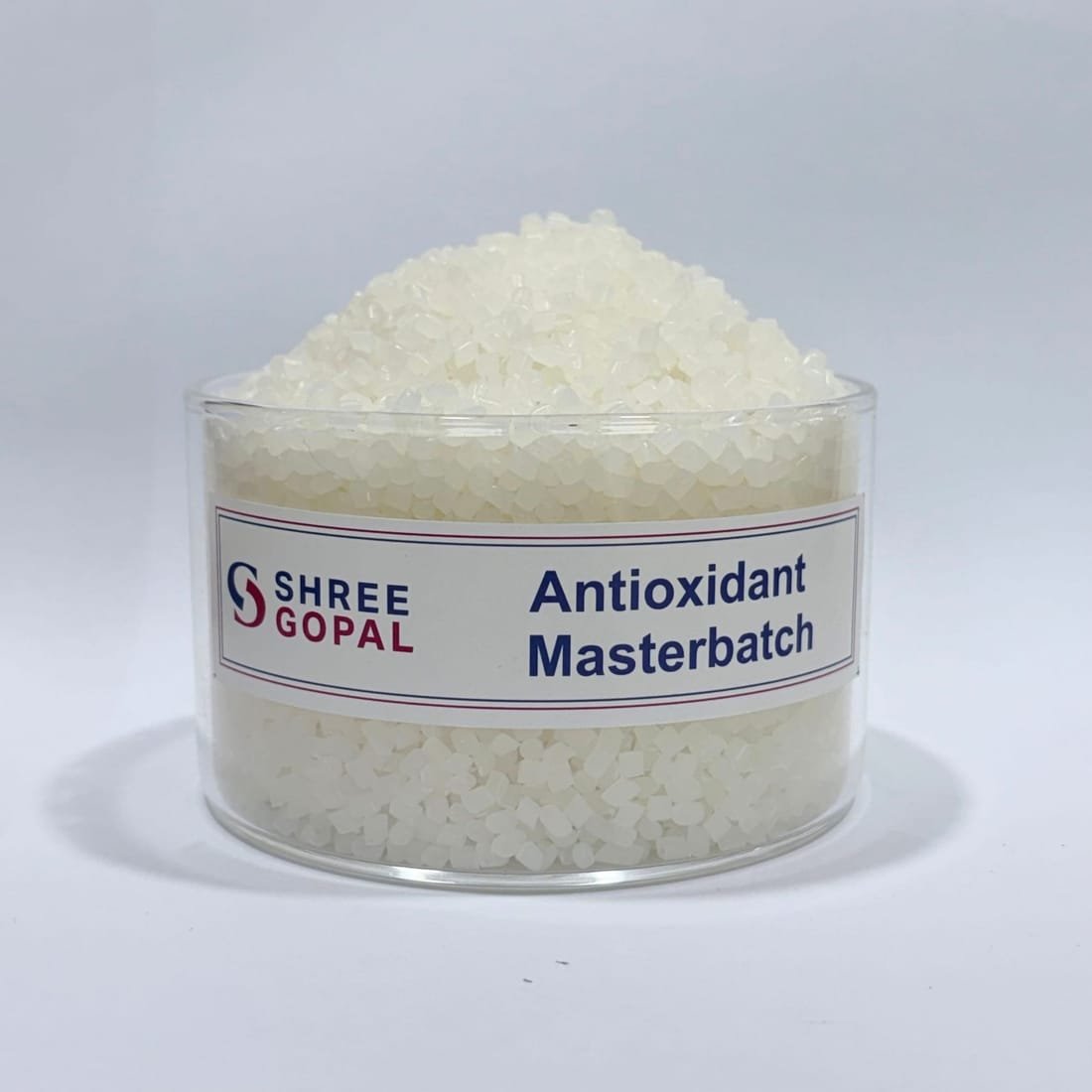
- Off-white cylindrical pellets
- Active chemistry
- Primary and secondary antioxidant blend
- Carrier resin
- LDPE / LLDPE / PP
- Recommended loading
- Varies by application; recommended dosage shared per grade
- Function
- Melt + long-term thermal stabiliser (process and service)
- Packaging
- 25 kg PP bags
Key benefits
Prevents heat and oxidation damage
It stops the polymer from breaking down or hardening at processing temperatures.
Stable through repeated recycling
It keeps flow and strength steady even after material has been recycled several times.
Keeps colour and flow steady
It reduces yellowing and flow loss in aged and recycled material.
Long-term heat protection
It extends the working life of parts used outdoors, in vehicles and in infrastructure.
Applications

Frequently asked questions
What is Anti-Oxidant Masterbatch used for?
It protects plastic from heat and oxidation during processing and in service, so parts do not turn brittle, discoloured or weak. It is widely used in recycled polymers, pipe, cable and parts that see high temperatures.
Which polymers does it work with?
Standard grades are compatible with polyethylene and polypropylene, and also suit recycled polyolefins. We match the carrier resin to your base resin so it disperses cleanly during processing.
Can I get a trial sample?
Yes. Share your base resin, end application and your processing temperature and end use, and we will ship a matched grade for line evaluation along with a Certificate of Analysis.
Is it useful for recycled material?
Yes. Recycled polymer has often lost much of its original stabiliser through earlier heat history, so an anti-oxidant masterbatch helps restore stability and extend the life of the part.
What is the typical lead time?
Standard grades ship in 7 to 14 working days from order confirmation. Custom formulations matched to a specific application take 3 to 4 weeks. We confirm an exact timeline at the quote stage.